A Ghanaian business can purchase goods from China, India, the United States, the United Kingdom, Turkey or another market, pay the supplier, arrange shipping and begin preparing for Customs clearance without fully understanding one critical question:
At what point does the risk of loss or damage become my responsibility?
The answer may be hidden in three letters on the commercial invoice:
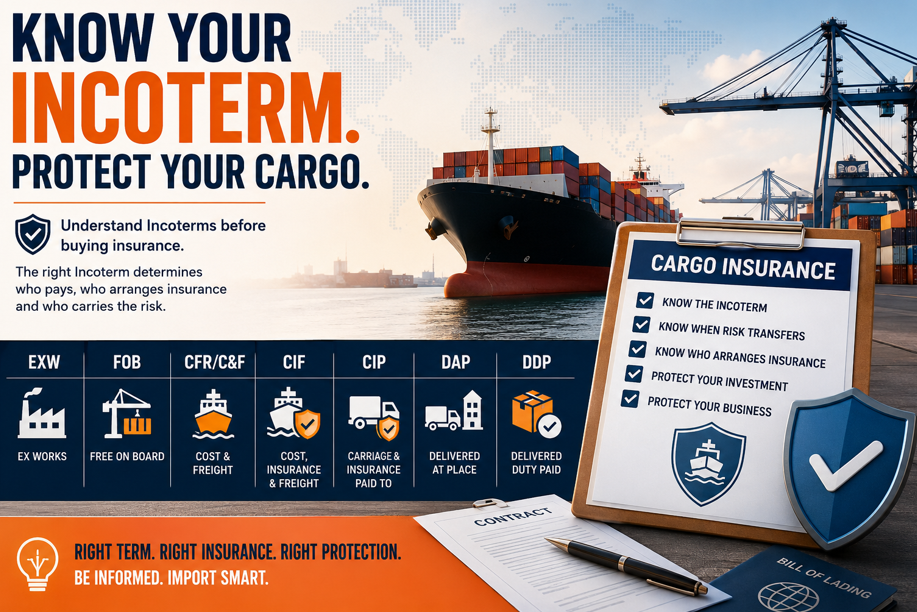
EXW. FOB. CFR. CIF. CIP. DAP. DDP.
These are Incoterms® rules developed by the International Chamber of Commerce (ICC). They help define important responsibilities between buyers and sellers, including delivery, costs, transport, customs formalities and—most importantly for insurance purposes—the point at which risk transfers.
The ICC describes Incoterms® as internationally recognised rules that help clarify the tasks, costs and risks involved in delivering goods from sellers to buyers. The current edition is Incoterms® 2020.
For importers, understanding these terms is not merely a logistics issue.
It is an insurance issue.
The Most Important Question: Who Carries the Risk?
When an importer buys goods internationally, there are actually two separate questions:
Who pays for the transportation? and Who carries the risk if something happens to the goods?
These are not always the same party.
This is one of the most important concepts to understand about Incoterms®.
For example, under CFR, the seller pays the freight to the named destination port, but the risk of loss or damage transfers to the buyer when the goods are loaded on board the vessel. The ICC specifically notes that under CFR the seller has no obligation to purchase insurance, and the buyer would be well advised to arrange cover.
That means an importer could mistakenly think:
“The supplier is paying the freight, so my goods are covered.”
Not necessarily.
Freight payment and insurance protection are different matters.
Why This Matters for Ghanaian Importers
Ghana's Insurance Act, 2021 (Act 1061), Section 222(1), provides that a person who imports goods, other than personal effects, into Ghana shall insure the goods with an insurer licensed under the Act.
This makes understanding the insurance implications of the commercial contract particularly important.
An importer should therefore not simply tell a broker:
“I am buying goods on CIF.”
The broker needs to understand the transaction, the shipment, the value, the route, the Incoterm and the insurance already arranged if any.
The importer needs to know what protection already exists and whether it is adequate.
Understanding the Major Incoterms® Used by Importers
Let's examine seven terms that Ghanaian importers frequently encounter.
1. EXW — Ex Works
What does EXW mean?
Under EXW (Ex Works), the seller's responsibility is relatively limited.
The seller makes the goods available to the buyer at the named place, commonly the seller's factory, warehouse or premises.
Under Incoterms® 2020, delivery and risk transfer when the goods are placed at the buyer's disposal at the named place. The seller generally does not have to load the goods onto the collecting vehicle or clear them for export.
What does this mean for the importer?
The buyer assumes a substantial part of the transportation responsibility and risk from the point of delivery.
That means the importer should think about insurance very early.
If the goods are sitting at the supplier's warehouse waiting for collection, the importer should already understand:
when the risk transfers;
who is arranging transportation;
who is responsible for insurance;
where the insurance begins;
what happens during inland transportation to the export port.
Insurance lesson
EXW = do not wait until the vessel sails before thinking about insurance.
The risk may already be yours.
2. FOB — Free On Board
FOB is one of the most commonly used terms in international sea trade.
Under FOB, the seller delivers the goods on board the vessel at the named port of shipment.
The risk of loss or damage transfers to the buyer when the goods are on board the vessel. From that point, the buyer bears the risks and costs associated with the shipment.
Example
A Ghanaian importer buys machinery from China:
FOB Shanghai
The supplier delivers the machinery on board the vessel at Shanghai.
Once the goods are on board, the risk transfers to the Ghanaian buyer.
The buyer therefore needs to consider marine cargo insurance for the voyage.
A common mistake
Some importers think:
“FOB means the supplier is responsible until Ghana.”
It does not.
FOB identifies the delivery point and transfer of risk at the named port of shipment.
Insurance lesson
FOB = the buyer needs to pay particular attention to cargo insurance.
And remember: ICC notes that FOB is intended for sea or inland waterway transport where delivery is made by placing the goods on board a vessel. For containerised shipments handed to a carrier at a terminal before loading, ICC recommends considering FCA instead.
3. CFR / C&F — Cost and Freight
CFR means Cost and Freight.
It is sometimes referred to commercially as C&F.
Under CFR, the seller pays the cost and freight required to bring the goods to the named destination port.
But here is the critical point:
The seller pays the freight, but the risk transfers to the buyer when the goods are on board the vessel at the port of shipment.
The ICC expressly states that under CFR the seller has no obligation to purchase insurance for the buyer.
Example
A Ghanaian importer purchases:
CFR Tema Port
The supplier pays the ocean freight to Tema.
But if the goods are damaged during the voyage, the buyer may bear the risk because risk transferred when the goods were loaded on board at the port of shipment.
This is where importers can get caught out.
The importer sees:
CFR Tema
and thinks:
“The supplier is paying for shipping to Tema, so the shipment must be insured.”
That assumption can be wrong.
Insurance lesson
CFR = freight is paid by the seller; insurance is not automatically provided by the seller.
The importer should arrange appropriate insurance.
4. CIF — Cost, Insurance and Freight
CIF stands for Cost, Insurance and Freight.
This is where the situation becomes more interesting.
Under CIF, the seller arranges and pays for freight to the named destination port and also arranges insurance.
But there is an important distinction:
The fact that the seller must arrange insurance does not mean the buyer should automatically assume that the insurance is sufficient.
Under Incoterms® 2020, CIF uses a minimum level of insurance cover, based on Institute Cargo Clauses (C) or similar clauses, unless the parties agree otherwise. The ICC explains that the buyer can seek higher protection by agreement or arrange additional insurance.
Risk still transfers at shipment
Another important point is that under CIF, risk transfers when the goods are on board the vessel at the port of shipment—not when the goods arrive in Ghana.
So:
CIF does not mean the seller carries the risk all the way to Ghana.
The seller arranges insurance for the buyer's risk during the carriage, but the underlying transfer of risk still occurs at the shipment point.
Insurance lesson
CIF = insurance is arranged by the seller, but the importer must examine the cover.
Ask:
What is the insured value?
What risks are covered?
What exclusions apply?
What is the deductible?
Who is entitled to make the claim?
Does the cover satisfy the importer's needs?
Is additional cover necessary?
5. CIP — Carriage and Insurance Paid To
CIP means Carriage and Insurance Paid To.
It is an important term because it can be used for any mode or combination of transport, unlike CIF, which is reserved for sea and inland waterway transport.
Under CIP, the seller:
arranges carriage to the named destination;
pays the transportation costs; and
arranges insurance covering the buyer's risk during carriage.
But again, the transfer of risk happens earlier—when the goods are handed over to the carrier in accordance with the rule.
The important insurance difference
Incoterms® 2020 requires a higher level of insurance under CIP than CIF.
The ICC states that CIP requires insurance consistent with Institute Cargo Clauses (A) or similar clauses, while CIF retains the minimum default level based on Clause C or similar cover.
This is an excellent example of why an importer should understand the actual Incoterm rather than simply saying:
“My supplier has insured the goods.”
Insurance lesson
CIP provides seller-arranged insurance, but the importer should still verify the policy and its adequacy.
6. DAP — Delivered at Place
DAP means Delivered at Place.
Under DAP, the seller bears the risks involved in bringing the goods to the named destination and places them at the buyer's disposal on the arriving means of transport, ready for unloading.
Risk transfers at that destination point.
This is very different from FOB or CFR.
Under FOB:
Risk transfers at the export port.
Under DAP:
Risk remains with the seller until the agreed destination.
Does DAP mean the seller must buy insurance?
Not necessarily.
DAP allocates risk and responsibilities, but it does not itself impose an obligation on the seller to purchase cargo insurance.
The seller carries the risk until delivery under DAP, so the seller may choose to insure that risk.
Insurance lesson
If you are buying on DAP, ask:
“What insurance arrangement protects the goods during the period for which the seller carries the risk, and what happens once risk transfers to me?”
7. DDP — Delivered Duty Paid
DDP places even greater responsibility on the seller.
Under DDP, the seller takes responsibility for delivering the goods to the named destination and handling the applicable export, transit and import formalities and duties, subject to the detailed terms of the rule.
For the buyer, this can appear very convenient.
But convenience should not mean ignorance.
The importer should still understand:
what the supplier is responsible for;
where delivery occurs;
when risk transfers;
what insurance the supplier has arranged;
whether the supplier can legally and practically handle the required import formalities;
whether the transaction structure is appropriate for the destination country.
Insurance lesson
DDP does not mean “the buyer has nothing to worry about.”
The buyer should still understand the insurance and risk position.
The Seven Terms at a Glance
Incoterm
Who arranges main carriage?
When does risk generally transfer?
Seller's insurance obligation
EXW
Buyer
At seller's named place when goods are made available
No
FOB
Buyer
When goods are on board vessel at shipment port
No
CFR/C&F
Seller
When goods are on board vessel at shipment port
No
CIF
Seller
When goods are on board vessel at shipment port
Yes — minimum cover under Incoterms® 2020
CIP
Seller
When goods are handed to carrier
Yes — higher level of cover under Incoterms® 2020
DAP
Seller
At named destination, ready for unloading
No
DDP
Seller
At named destination, ready for unloading
No
This table is a simplified educational summary. The precise obligations depend on the full Incoterms® 2020 rule and the named place or point in the contract.
The Biggest Misunderstanding: Cost Is Not Risk
This is probably the most important lesson for an importer.
Consider:
CFR Tema
The seller pays freight.
But the buyer carries the risk during the main sea voyage.
Now consider:
CIF Tema
The seller pays freight and arranges insurance.
But the risk still transfers when the goods are loaded on board at the shipment port.
This demonstrates why three separate questions must always be asked:
1. Who pays?
2. Who carries the risk?
3. Who arranges the insurance?
The answer can be different for each question.
Why This Matters Under Ghana's Insurance Framework
Section 222 of the Insurance Act, 2021 is particularly relevant to Ghanaian importers because it provides for compulsory insurance of imported goods, other than personal effects, with an insurer licensed under the Act.
This means importers should not treat the insurance clause in their purchase contract as a minor administrative matter.
Before placing an order, the importer should know:
What is my Incoterm?
↓
When does risk transfer?
↓
Who is responsible for insurance?
↓
Has insurance actually been arranged?
↓
What does the policy cover?
↓
Is the insurer properly licensed where required?
↓
Do I need additional cover?
This is particularly important when importing high-value commercial goods into Ghana.
What Importers Should Ask Their Suppliers
Before accepting a quotation or purchase contract, ask the supplier to clearly state the applicable Incoterm.
For example:
CIF Tema Port, Ghana — Incoterms® 2020
is much clearer than simply writing:
CIF Ghana
The named place or port matters.
Then ask:
If the supplier says the goods are insured:
“Please provide the insurance certificate/policy details.”
Then verify:
insured party;
sum insured;
currency;
voyage;
origin and destination;
policy period;
risks covered;
exclusions;
deductible;
claims procedure;
insurer;
applicable clauses.
Do not assume that the word “Insurance” in CIF or CIP means that every possible cargo risk has been covered.
A Practical Example for a Ghanaian Importer
Imagine a Ghanaian company purchases machinery worth US$200,000 from China.
The supplier offers three options:
Option A — FOB Shanghai
The buyer takes on risk once the machinery is on board the vessel.
Buyer should arrange cargo insurance.
Option B — CFR Tema
The supplier pays freight to Tema.
Buyer still carries the main transit risk once the goods are on board.
Buyer should arrange cargo insurance.
Option C — CIF Tema
The supplier pays freight and arranges insurance.
But the buyer should still obtain the insurance details and check whether the minimum CIF cover is adequate for the machinery.
If the buyer needs broader protection, additional insurance arrangements may be necessary.
This is why the cheapest quotation is not necessarily the cheapest transaction.
This is where professional insurance advice becomes valuable.
An importer should not have to become an insurance expert simply to import goods.
A competent insurance broker can help the importer understand:
the nature of the cargo;
the transportation route;
the Incoterm;
the value at risk;
the appropriate policy;
coverage requirements;
exclusions;
deductibles;
claims procedures; and
whether existing supplier-arranged insurance is sufficient.
The broker's role is therefore not simply to sell a policy.
It is to help the importer understand and manage the risk.
The PVoC Connection
For importers dealing with Ghana's Pre-Export Verification of Conformity (PVoC) requirements, this understanding becomes even more valuable.
An import transaction can involve several connected stages:
Supplier
↓
Purchase Contract
↓
Incoterm
↓
PVoC / Inspection
↓
Insurance
↓
Shipping
↓
Customs / ICUMS
↓
Port Clearance
↓
Delivery
Each stage deals with a different aspect of the import transaction.
PVoC is concerned with conformity requirements.
Customs is concerned with customs valuation, duties and clearance.
Insurance is concerned with transferring financial risk.
The importer needs to understand how these pieces fit together.
Before You Sign Your Next Import Contract
About 24HourBusiness.org
24HourBusiness.org provides practical business intelligence and educational content for Ghanaian businesses participating in the country's emerging 24-hour economy.
Our goal is to help businesses better understand trade, finance, insurance, logistics, compliance, technology and commercial risk so they can make better-informed decisions.
This article is for general educational purposes and should not be treated as legal, customs or insurance advice. Importers should obtain professional advice appropriate to their particular transaction.
Disclaimer:
The views expressed on this site are those of the contributors or columnists, and do not necessarily reflect 24HourBusiness.com's position. 24HourBusiness.com will not be responsible or liable for any inaccurate or incorrect statements in the contributions or columns here.
When goods are being transported internationally, the importer is exposed to risks long before the consignment arrives at the port in Ghana. Cargo can be damaged by fire, seawater, rough handling, accidents, theft, flooding or other insured perils during transportation
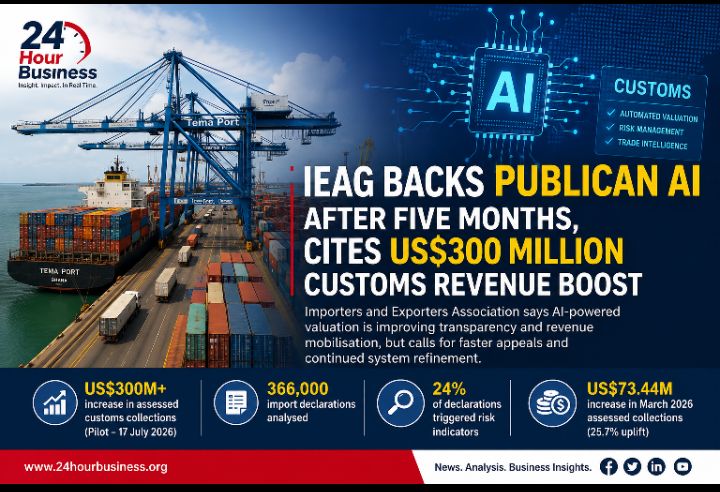
Importers and Exporters Association says AI-powered valuation is improving transparency and revenue mobilisation, but calls for faster appeals and continued system refinement
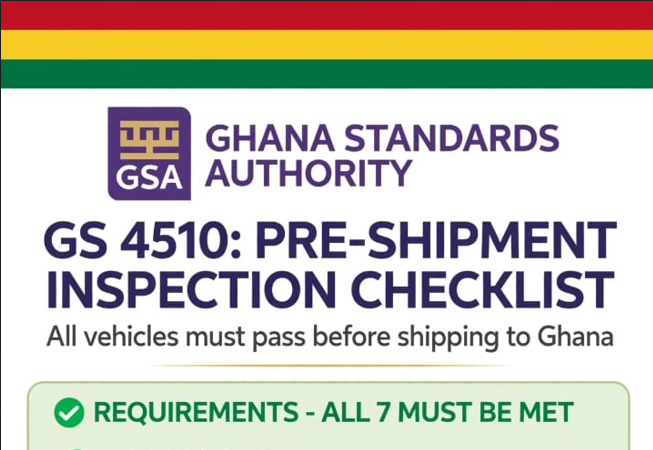
Recent reporting indicates that the new regime will place greater emphasis on pre-shipment inspection and conformity certification before vehicles enter Ghana.
The new enforcement regime is expected to reduce the entry of accident-damaged, flooded, burnt, excessively worn and otherwise unsafe vehicles into Ghana while creating a more transparent and level playing field for responsible importers and dealers.
Aug 20, 2026
148
Premium Industrial Header Ad Zone Space (Available for Placement)
 Export, Trade & Logistics