Ghana will host the maiden Invest Ghana Summit on November 16–17, 2026, in Accra, in an initiative aimed at attracting investment into manufacturing, agribusiness, technology and other productive sectors of the economy.
Ghana is preparing to bring investors, policymakers and business leaders together to unlock investment opportunities, strengthen local industries and accelerate the transition from raw material exports to value-added production.
Ghana will host the maiden Invest Ghana Summit on November 16–17, 2026, in Accra, in an initiative aimed at attracting investment into manufacturing, agribusiness, technology and other productive sectors of the economy.
The summit, organised by the Ghana Investment Promotion Authority (GIPA) in partnership with key government institutions, is being positioned as a platform for connecting domestic and international investors with investment opportunities across the country's 16 regions.
Under the theme, “Investing in Ghana’s New Economy: Building a Productive Economy that Creates Value and Competes Globally,” the event is expected to bring together government officials, financial institutions, business executives, entrepreneurs and development partners to explore investment projects and establish strategic partnerships.
The initiative comes as Ghana seeks to strengthen domestic production, expand industrial capacity, create employment and increase the value generated from its natural and agricultural resources.
According to the Ghana News Agency, the summit was launched in Accra in October by the Minister for Trade, Agribusiness and Industry, Elizabeth Ofosu-Adjare, who called for investment that supports value addition, innovation and the development of globally competitive businesses.
Why the Invest Ghana Summit Matters
For many years, Ghana's economy has relied significantly on commodities such as cocoa, gold, oil and other raw materials. Although these exports generate foreign exchange and economic activity, the extent of local processing and manufacturing determines how much additional value, employment and industrial capability the country develops at home.
The Invest Ghana Summit seeks to encourage a stronger focus on productive investment, including projects that process local resources, develop manufacturing capacity, improve technology adoption and create opportunities for Ghanaian businesses to participate in domestic and international supply chains.
The government has identified investment mobilisation as an important component of its wider economic agenda, including initiatives associated with the 24-Hour Economy and the Accelerated Export Development Programme.
For prospective investors, the summit offers an opportunity to examine projects, engage relevant institutions and explore partnerships. For Ghanaian enterprises, it provides a potential avenue to seek capital, technical expertise, strategic partners and access to new markets.
However, the long-term value of the initiative will depend on the quality of the projects presented, the availability of financing and the extent to which discussions translate into actual investments.
1. Manufacturing: Building More Products in Ghana
Manufacturing is one of the sectors expected to feature prominently at the summit.
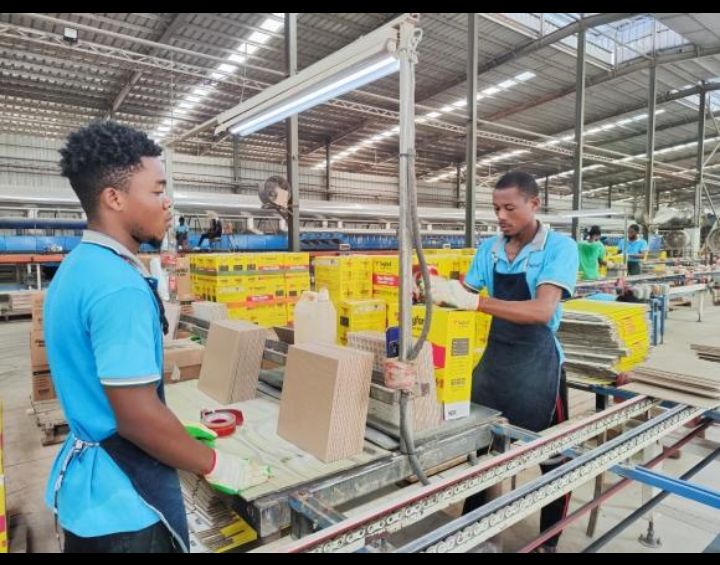
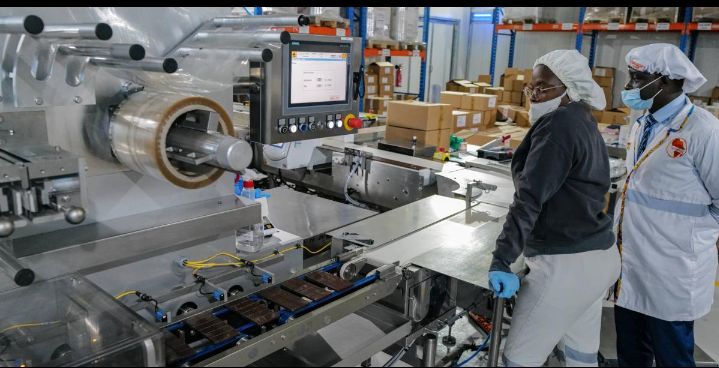
Investment opportunities may include food processing, pharmaceuticals, textiles and garments, automotive-related industries, packaging, building materials and the production of industrial inputs.
Ghana's agricultural resources, growing consumer market and access to the wider African market provide potential foundations for manufacturing enterprises. Businesses that can process local raw materials into finished or intermediate products may also be able to reduce reliance on imported goods in selected market segments.
For example, agro-processing companies could invest in facilities for converting agricultural produce into packaged foods, ingredients and other commercially valuable products. Manufacturers could also explore opportunities in packaging, machinery maintenance, industrial services and components needed by larger producers.
Such investments can create opportunities for small and medium-sized enterprises (SMEs) to participate as suppliers, distributors, contractors and service providers.
Nevertheless, investors must assess production costs, energy reliability, access to finance, raw-material availability, logistics and market demand before committing capital.
The central opportunity is to develop commercially viable enterprises that can compete on quality, cost and reliability rather than depending solely on policy incentives or the domestic market.
2. Agribusiness: Turning Agricultural Production into Higher Value
Agribusiness represents another major opportunity area, particularly in a country with substantial agricultural production and growing demand for processed food.
Investment opportunities can extend beyond farming to include irrigation, storage, cold-chain logistics, agricultural inputs, mechanisation, processing, packaging and distribution.
In the cocoa industry, for example, greater local processing can create opportunities in cocoa liquor, cocoa butter, cocoa powder and other products used by food manufacturers.
Other agricultural value chains, including rice, maize, cassava, shea, cashew, fruits and vegetables, may offer opportunities for investors seeking to develop processing facilities and more efficient routes from farms to markets.
Reducing post-harvest losses is also important. Investments in warehousing, refrigeration, drying, transport and modern processing equipment can help businesses preserve product quality and improve the reliability of agricultural supply.
For farmers, these developments could create additional markets for their produce. For processors, they could provide more dependable access to raw materials. For exporters, they could support the development of higher-value products for regional and international markets.
However, these benefits are not automatic. Agricultural investment requires careful attention to seasonal production, land access, water availability, farmer relationships, product standards and the commercial terms governing supply agreements.
Investors should therefore look for projects that combine reliable production with credible buyers, efficient logistics and sustainable financial models.
3. Technology: Supporting a More Productive Economy
Technology is another important component of Ghana's investment agenda.
Digital businesses can support almost every productive sector, from manufacturing and agriculture to financial services, logistics, healthcare and international trade.
Potential areas for investment include enterprise software, digital payments, supply-chain management, agricultural technology, telecommunications infrastructure, data services and platforms that connect producers with buyers.
For manufacturers, digital systems can improve inventory management, production planning, quality control and distribution. Agricultural businesses can use digital tools to improve farm records, traceability and coordination between producers and buyers.
Logistics operators can benefit from systems that improve cargo visibility, shipment coordination and documentation. Exporters can use digital platforms to manage orders, communicate with overseas customers and maintain records required by trading partners.
For Ghanaian technology entrepreneurs, the opportunity is not limited to creating consumer applications. There is also demand for practical business software that addresses operational problems, improves productivity and helps companies meet regulatory or customer requirements.
The commercial challenge is to develop solutions that customers can afford, adopt and integrate into their existing operations.
Investment in technology should therefore be assessed in terms of measurable business outcomes, including lower operating costs, improved service delivery, greater market access and increased productivity.
Investment Opportunities Across Ghana's 16 Regions
One of the summit's notable features is its connection with GIPA's Investment Opportunity Mapping Project, which seeks to identify, document and package investment opportunities across all 16 regions.
The objective is to make it easier for investors to identify projects beyond the traditional concentration of commercial activity in major urban centres.
Recent regional investment engagements have highlighted opportunities in areas such as agro-processing, commercial agriculture, tourism and renewable energy.
In the Upper East Region, for instance, reported areas of interest include irrigation-supported agriculture, rice production and the potential rehabilitation of selected agro-industrial facilities. Such proposals will require project-specific technical and financial assessments before their commercial viability can be established.
Regional investment mapping could help connect local authorities, entrepreneurs and project promoters with investors who have the capital, technical expertise and market access required to develop commercially sustainable ventures.
For businesses outside Accra and Kumasi, this may provide an opportunity to present viable projects and attract partners.
The key requirement is that projects should be supported by credible feasibility studies, clear ownership arrangements, realistic cost estimates, reliable market information and a transparent assessment of risks.
What Ghanaian SMEs Should Do Before the Summit
The summit should not be viewed exclusively as an event for large corporations and foreign investors. Ghanaian SMEs can also use the occasion to explore partnerships, improve their investment readiness and identify opportunities to participate in larger projects.
Businesses interested in attracting investment should prepare before approaching potential partners.
First, develop a clear business proposal. Explain the problem the business solves, the market it serves, its competitive advantage and the opportunity for expansion.
Second, establish the financial position. Prepare realistic revenue projections, operating costs, capital requirements and an explanation of how additional investment would be used.
Third, identify the right type of investor. Some businesses need equity capital, while others need loans, equipment financing, technical partnerships or access to new markets.
Fourth, demonstrate operational readiness. Investors are likely to examine management capacity, legal documentation, customer relationships, supplier arrangements and the business's ability to execute its plans.
Finally, define the expected partnership. Business owners should be clear about whether they are seeking funding, a joint venture, technology transfer, distribution agreements or another form of commercial collaboration.
Being investment-ready does not guarantee funding, but it can help businesses engage potential investors more effectively.
Investment Reforms and the Business Environment
GIPA has also highlighted reforms to Ghana's investment framework as part of efforts to improve the investment environment.
According to reporting by the Ghana News Agency, the reforms include changes under the Ghana Investment Promotion Centre Act, 2013 (Act 865), as amended by Act 1135, which removed the US$500,000 minimum capital requirement for wholly foreign-owned enterprises.
The authority has also outlined changes under Act 1173 concerning Technology Transfer Agreements, including the treatment of software and foreign trademarks, minimum agreement duration and renewal arrangements.
Prospective investors should consult GIPA and the relevant legal and regulatory authorities to establish the current requirements applicable to their investment structure, sector and proposed activities.
An investment-friendly framework is important, but investors will also evaluate the practical factors that determine whether projects succeed: policy predictability, access to finance, infrastructure, workforce skills, market demand, tax administration and the efficiency of regulatory processes.
The summit provides an opportunity for government and business leaders to discuss these issues alongside the investment opportunities being promoted.
From Investment Announcements to Measurable Results
The Invest Ghana Summit comes at a time when Ghana is seeking to attract capital into productive sectors that can strengthen domestic industries and increase the country's participation in regional and global markets.
Its success should ultimately be assessed by the quality of the partnerships developed and the projects that progress beyond initial discussions.
Important measures will include the amount of capital actually committed and deployed, new production capacity, jobs created, technology transferred, local suppliers engaged and exports generated.
It will also be important to determine whether smaller Ghanaian enterprises gain meaningful opportunities to participate in the resulting supply chains.
For investors, the summit offers a platform to explore opportunities and establish relationships. For Ghanaian businesses, it provides a reason to strengthen their proposals, improve their operational readiness and engage potential partners.
For the country, the broader objective is to convert investment interest into productive enterprises that generate lasting economic value.
Summit Details
The Invest Ghana Summit 2026 is scheduled for November 16–17 at Kempinski Gold Coast City, Accra. The 22nd Ghana Club 100 Awards is scheduled for November 18.
Businesses, investors and entrepreneurs interested in participating should consult the official summit website for registration details, the programme, sector opportunities and participation requirements.
Official website: https://igs.gipa.gov.gh/
The summit provides an opportunity to discuss how capital, technology and partnerships can help Ghana move towards a more productive, diversified and competitive economy. The ultimate test will be whether these engagements lead to viable projects, stronger local businesses and measurable economic results.
Sources: Ghana Investment Promotion Authority; Ghana News Agency; Ministry of Trade, Agribusiness and Industry.
Published by: 24HourBusiness.org
 Export, Trade & Logistics