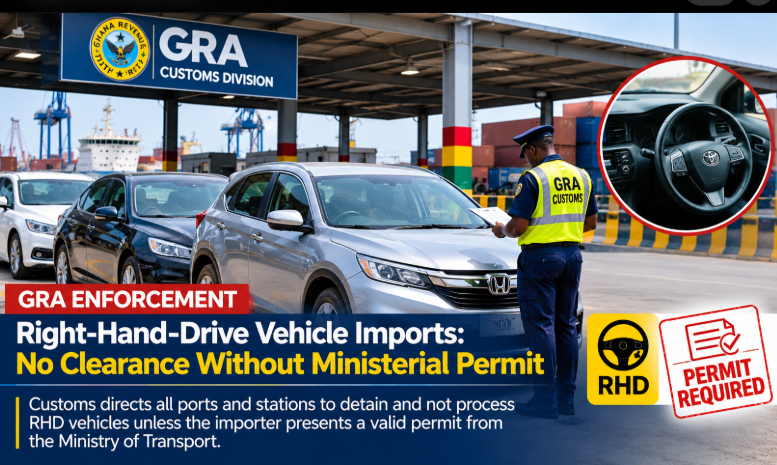
Ghana's Customs Division has directed all ports and stations to detain right-hand-drive vehicles presented for clearance without valid ministerial permits, reinforcing the requirements of the Customs Act, 2015.
The Customs Division of the Ghana Revenue Authority (GRA) has issued a directive requiring strict enforcement of regulations governing the importation of right-hand-drive (RHD) motor vehicles into Ghana.
In a memorandum dated 16 November 2026, referenced H/PREV/1 and signed by the Commissioner of Customs, Aaron Kanor, all Sector Commanders at Ghana's ports, frontier stations and customs collections have been instructed not to process or release any right-hand-drive vehicle unless the importer produces a valid permit from the Ministry of Transport authorising its importation.
The directive follows concerns that some right-hand-drive vehicles are being presented for customs clearance without the requisite ministerial approval.
What does the law say?
The GRA memorandum draws attention to Section 58 of the Customs Act, 2015 (Act 891), which prohibits the importation of right-hand-drive motor vehicles into Ghana unless approval has been granted by the Minister responsible for Transport.
The provision also addresses the consequences of importing prohibited motor vehicles, including seizure and forfeiture to the State.
Under the new enforcement instruction, any right-hand-drive vehicle presented for clearance without the required permit must be detained and dealt with in accordance with the law.
This means that importers should not assume that a vehicle will be cleared simply because it has arrived at a Ghanaian port or has been purchased from an overseas supplier.
Is Ghana banning all right-hand-drive vehicles?
The directive should not be interpreted as an entirely new blanket prohibition.
Rather, it reinforces an existing legal requirement that importers obtain ministerial approval before importing right-hand-drive vehicles.
The possibility of obtaining an exception through the appropriate ministerial authorisation remains important, particularly for specialised vehicles whose operational requirements may necessitate right-hand-drive configuration.
However, importers must ensure that the necessary approval is obtained before shipping. They should not rely on informal assurances that permits can be secured after the vehicle arrives in Ghana.
What does this mean for vehicle importers and dealers?
The directive has immediate implications for businesses involved in Ghana's used-vehicle import trade.
1. Importers
Individuals and companies planning to import right-hand-drive vehicles should first establish whether their intended imports qualify for ministerial approval. The relevant permit should be secured before shipment.
2. Vehicle dealers
Dealers should review their existing inventory and pending orders, particularly vehicles sourced from markets where right-hand-drive vehicles are commonly sold.
Customers should be informed about the regulatory requirements before making purchasing commitments.
3. Clearing and forwarding agents
Clearing agents should verify the availability and validity of the required ministerial permit before initiating customs clearance procedures for right-hand-drive vehicles.
4. Shipping companies and overseas exporters
International suppliers, exporters and shipping companies dealing in vehicles destined for Ghana should incorporate the permit requirement into their pre-shipment checks to minimise the risk of delays, detention and potential financial losses.
5. Prospective vehicle buyers
Buyers should exercise caution when purchasing vehicles that may have been imported without the necessary approval. They should request relevant import and registration documentation and verify the vehicle's compliance status.
The road safety dimension
Beyond customs administration, the regulation raises an important road safety consideration.
Vehicles originally manufactured with right-hand steering may require substantial engineering modifications to operate in countries where traffic keeps to the right.
Poorly executed steering conversions can compromise critical safety systems, including steering linkages, braking mechanisms, airbags and vehicle electrical systems.
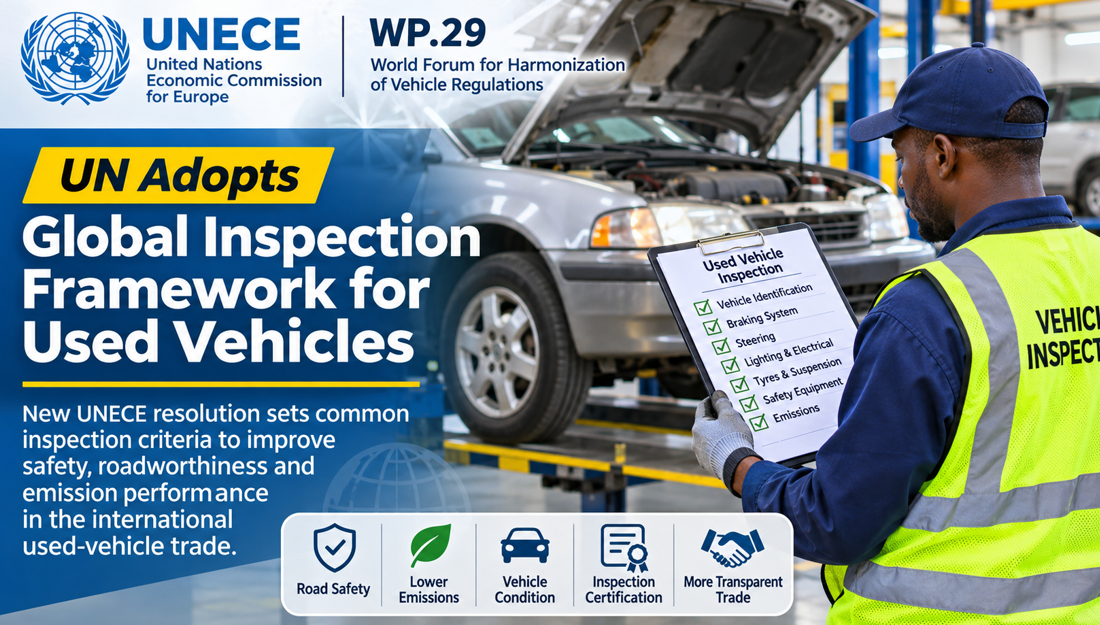
The public education research accompanying this development highlights the risks associated with unregulated conversions and the need for proper technical and safety assessments.
For Ghana, where road safety remains an important national concern, enforcement of vehicle import regulations should be accompanied by effective technical oversight and public education.
What should importers do now?
Importers and automotive businesses should take the following steps:
Confirm the original steering configuration of vehicles before purchase.
Consult the Ministry of Transport regarding the applicable approval procedure.
Obtain the required ministerial permit before shipment.
Share the permit with relevant clearing agents and shipping partners.
Verify all applicable customs and vehicle compliance requirements before proceeding with importation.
Businesses with vehicles already purchased or shipped should urgently seek clarification from the Ministry of Transport and GRA Customs on the applicable procedures for their consignments.
A call for clear stakeholder communication
While strict enforcement is necessary to uphold the law and protect road users, effective implementation will require clear communication between the Ministry of Transport, GRA Customs, the Ghana Standards Authority, the Driver and Vehicle Licensing Authority (DVLA), shipping companies and the automotive trade.
Importers and dealers also need accessible information on permit application procedures, eligibility criteria, documentation requirements and the treatment of vehicles already in transit.
Clear guidance will help businesses make informed decisions, reduce avoidable financial losses and ensure that legitimate vehicle imports comply with Ghana's regulatory framework.
The message from Customs is clear: no valid ministerial permit, no processing or release of right-hand-drive vehicles.
Automotive businesses and prospective importers should therefore verify their regulatory obligations before committing funds to right-hand-drive vehicle purchases or shipments.
Sources and References
Ghana Revenue Authority, Customs Division. Memorandum: Directive on the Processing and Release of Right-Hand Steering Vehicles, Ref. H/PREV/1, dated 16 November 2026.
Customs Act, 2015 (Act 891), Section 58.
MyJoyOnline, Customs Commissioner directs ports to detain right-hand-drive vehicles without import permits, 17 November 2026.
Citi Newsroom, Customs orders detention of right-hand-drive vehicles without valid import permits, 17 November 2026.
Published by: 24HourBusiness.org
Sector: Automotive & Transport
Topic: Customs Regulation | Vehicle Importation | Road Safety
 Export, Trade & Logistics